Ideas for product teams
Astra, Images 2.5, Sketch and Templates: What Changes for Creative Work?
OpenAI’s latest releases change how we brief, build and revise creative work. Here’s what matters, what AGI claims miss, and the wild demos already emerging.


The most important AI design upgrade might not be a prettier picture. It might be an image that survives the sentence: “Change the background, but leave everything else alone.”
Anyone who has used image generation for actual work knows the problem. The first result looks promising. You ask for a small correction. The product changes shape, the face changes, or the layout you liked disappears. Suddenly, you are managing a slot machine instead of developing an idea.
OpenAI’s latest releases target that gap between impressive output and useful creative work. GPT-6 Astra can work across software and carry out more complex tasks. ChatGPT Images 2.5 promises better image fidelity and editing consistency. Sketch lets you communicate visually. Templates give you somewhere more useful to start than an empty prompt box.
Together, they suggest a shift from asking AI to make something to directing it through the process of making something worth keeping.
Watch OpenAI’s Images 2.5 launch video
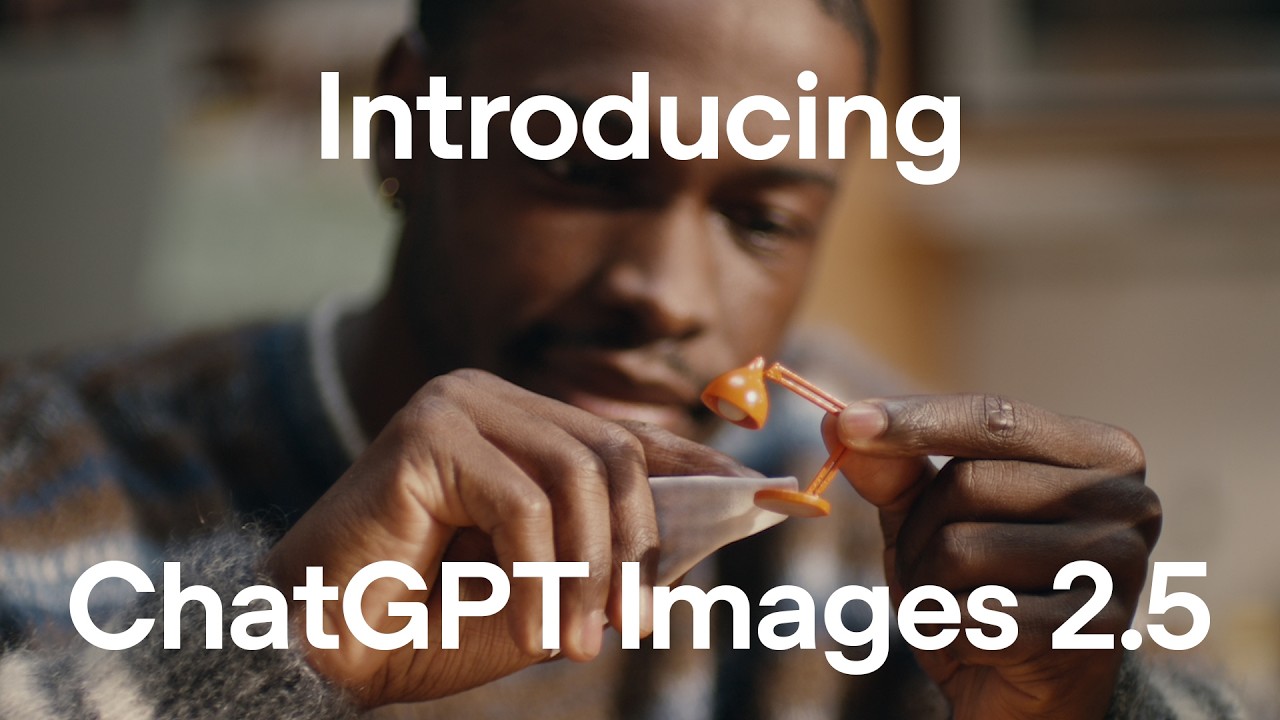
Watch “Introducing ChatGPT Images 2.5” on OpenAI’s official YouTube channel.
Video and thumbnail: OpenAI. Published September 8, 2026. It introduces faster generation, improved fidelity, consistency across edits and comment-based editing. The product details below come from the written announcements, rather than assumptions about what the film demonstrates.
Four things to understand—not four new models
A small but important distinction: these were not four separate model launches on the same day. GPT-6 Astra arrived on September 3. Images 2.5 arrived on September 8, alongside Sketch, Templates and other image-workflow features.
Astra: the model can operate the workshop
Astra’s relevance to designers is not simply that it writes better prompts. OpenAI positions it as a stronger computer-use and professional-work model: something that can interact with applications, carry out multistep tasks and check its work.
Its announcement includes a house modelled in Blender and turned into a walkable Unreal Engine 5 scene. It also describes better adherence to presentation templates and stronger visual judgement in websites, applications and games.
That points towards a different kind of assistant. Rather than giving you advice about a design tool, an agent can help operate the tool. A designer might ask for a scene, inspect it, change the brief and continue working in the resulting project.
There is a qualification: capability depends on the surrounding agent software, available tools, permissions and task. Access to Astra alone is not a guarantee that it can safely operate every application on your machine.
Images 2.5: the revision matters as much as the reveal
OpenAI says Images 2.5 improves natural lighting, textures, preservation of subjects from reference photos, precise editing and consistency over multiple edits. It reports generation latency reduced by up to 50% compared with Images 2.0. That is a vendor claim about generation latency—not evidence that every design project takes half the time.
The practical promise is fewer accidental changes. You should be better able to replace a background or alter an element without losing the visual identity around it. “Better” still does not mean perfect: product details, faces, wording and anything legally significant need checking.
For developers, the release includes GPT-Image-2.5 Flare, positioned as the default for most applications, and GPT-Image-2.5 Sunburst, positioned for more precise creative work with longer generation times. OpenAI says Images 2.5 is rolling out across ChatGPT, ChatGPT Work and Codex tiers.
Sketch: stop describing where the sofa goes
Some ideas are awkward in words and obvious in a drawing.
Sketch lets you draw directly in ChatGPT and use that drawing as a visual guide. OpenAI’s examples include room layouts, clothing concepts and doodles. You can invoke it with @Sketch, then add the style and details you want.
For creative work, this changes who can contribute to the brief. A client does not need the vocabulary for composition, negative space or visual hierarchy to show where the subject belongs.
It is a guide for image generation, though—not a promise of dimensionally accurate CAD, a building plan or a physically workable garment pattern.
Templates: less prompt-writing, more useful starting points
Templates organise popular formats such as posters, merchandise, flyers and product photos. Instead of inventing a prompt structure from scratch, you choose a format and supply the relevant details.
That is not a new reasoning model. It is product design that makes the model easier to use. And for many small businesses, it could matter more than another benchmark score.
A café owner trying to advertise a weekend event should not have to become a prompt engineer first. Equally, choosing a template does not guarantee an editable, layered professional document or print-ready output.
What changes for creative and design work?
The first credible version gets cheaper
A small business could sketch an advertising layout, provide a genuine product photo, generate several directions and refine the strongest one. An interior designer could explore a client's rough idea before spending time on a detailed model. A freelancer could show two genuinely different concepts rather than describe them in a proposal.
These are plausible workflows, not measured outcomes from this release. Their value depends on whether the outputs survive review.
The economic pressure is nevertheless clear: clients will increasingly question paying large sums for routine variations that software can prepare quickly. Work priced only around producing a first draft is more exposed than work that includes research, judgement, rights clearance, testing and delivery.
Creative direction becomes easier to express—and harder to fake
Sketches, reference images and comments let you explain what you mean more directly. That removes some tool friction. It does not remove the need to know what should be made.
If everyone can produce something polished, polish becomes a weaker differentiator. The harder questions remain: Does this suit the audience? Is the offer clear? Is it recognisably this brand? Does the image imply something the product cannot deliver?
Designers who can answer those questions still have a job. But the balance of that job may shift towards choosing, directing, testing and taking responsibility for the final result. That is not a painless transition, especially for junior production roles that historically provided a route into the profession.
Iteration could become a real conversation
The important test is not “Can it make a beautiful poster?” It is “Can it preserve the approved poster while making five specific corrections?”
Better multi-turn consistency and image comments could reduce the cost of getting from almost-right to approved. This is particularly useful in agency work, where feedback is often local: move the headline, keep the packaging unchanged, remove one object.
My recommendation is to test this with an existing asset. Write down what must remain unchanged before starting. After each edit, compare against that list. Count usable revisions, not attractive generations.
Professional tools are not automatically obsolete
A rendered image is not a production file. A walkable scene is not an approved architectural design. A convincing product visual is not proof of product accuracy.
Teams still need editable files where appropriate, correct dimensions, accessible interfaces, typography checks, commercial-use permissions and reliable handover. Human likenesses require consent; client material needs an appropriate data-handling policy.
The release also does not establish that Astra, Sketch and Images form a single guaranteed end-to-end workflow. Combining them successfully is something to test—not a feature to assume.
Are we closer to AGI than ever?
My answer is: these releases provide meaningful evidence of broader capability, but they do not establish that AGI has arrived—or give us a reliable countdown.
Astra is the more relevant development here. Image-editing controls make a product more useful; an agent that can reason, work across applications and adapt to unfamiliar tasks bears more directly on general intelligence.
OpenAI reports striking Astra results, including 99.9% on ARC-AGI-3 and 98% on FrontierMath Tier 4. Those are benchmark results reported in its announcement, not scores for “percentage of AGI achieved”. Test design, available tools, effort settings and independent replication all matter.
The same announcement reports 59.3% on Agents’ Last Exam, an evaluation of complex professional tasks in real software. That is a useful counterweight to the headline numbers: outstanding performance on one evaluation can coexist with substantial room for improvement elsewhere.
The question for businesses is therefore more demanding than whether a demo looks intelligent. Can the system complete unfamiliar work reliably? Notice its own mistakes? Preserve constraints over a long task? Refuse to exceed its authority when the easy route is outside the brief?
A model can be more capable without being safe to leave unsupervised. For creative teams, the immediate opportunity is supervised delegation—not handing over client accounts, publishing permissions and final approval because a launch video looks extraordinary.
End with the strange stuff: what people are already making
This is where the releases become fun. These examples are attributed demonstrations and creator reports, not results we independently reproduced. They involve Astra or Images 2.5; none proves that all four products were used together.
A pelican riding a bicycle, built in Blender. Simon Willison describes using Astra through Codex to operate Blender’s Python API, then asking for more background detail and flair. The useful twist is that this approach can produce editable Blender files rather than only a flat generated image. The bird is ridiculous; the workflow is not. Read his experiment.
The Golden Gate Bridge as a digital LEGO model. OpenAI’s Dominik Kundel reports giving Astra access to BrickLink Studio and getting a first version in about ten minutes, including little cars. That is a creator’s reported time for a first model—not a guarantee of physical buildability, available parts or finished instructions. Still, “describe a landmark and start exploring a custom LEGO set” is quite a leap from asking a chatbot for trivia. See Kundel’s account.
A house you can walk around before it exists. OpenAI demonstrates Astra modelling a house in Blender and turning it into an Unreal Engine 5 walkthrough. Treat it as a vendor demonstration, not independently validated architectural work. The creative possibility is compelling: discuss a space by exploring it, rather than trying to interpret a floor plan. See the house walkthrough in OpenAI’s announcement.
A custom arcade racer instead of another static mock-up. The Astra announcement showcases “Tidal Rush — Paradise GP”, crediting Pietro Schirano. It illustrates a direction in which non-technical people can commission playful interactive experiences, not just pictures of imagined games. A showcased game is not evidence that every prompt produces a polished release—but it is a much more interesting starting point. See the credited game example.
Your own gloriously embarrassing 1980s portrait. In the Images 2.5 announcement, OpenAI links a portrait prompt it describes as going viral: windbreakers, neon and period styling, personalised with your own photo. This is a vendor-reported trend, not an independently measured popularity claim. Shared prompts turn the creative recipe itself into something other people can remix. See the example and shared prompt.
A cycling pelican, a LEGO bridge, a playable racer and a house you can explore: the interesting part is not that AI can make weird things. It is that more people can now take a weird idea further before needing specialist help.
That is the creative shift worth watching. Not the end of taste, craft or judgement—but a much shorter distance between “wouldn’t it be interesting if…” and something you can actually inspect, change and share.